Barcol Hardness Tester
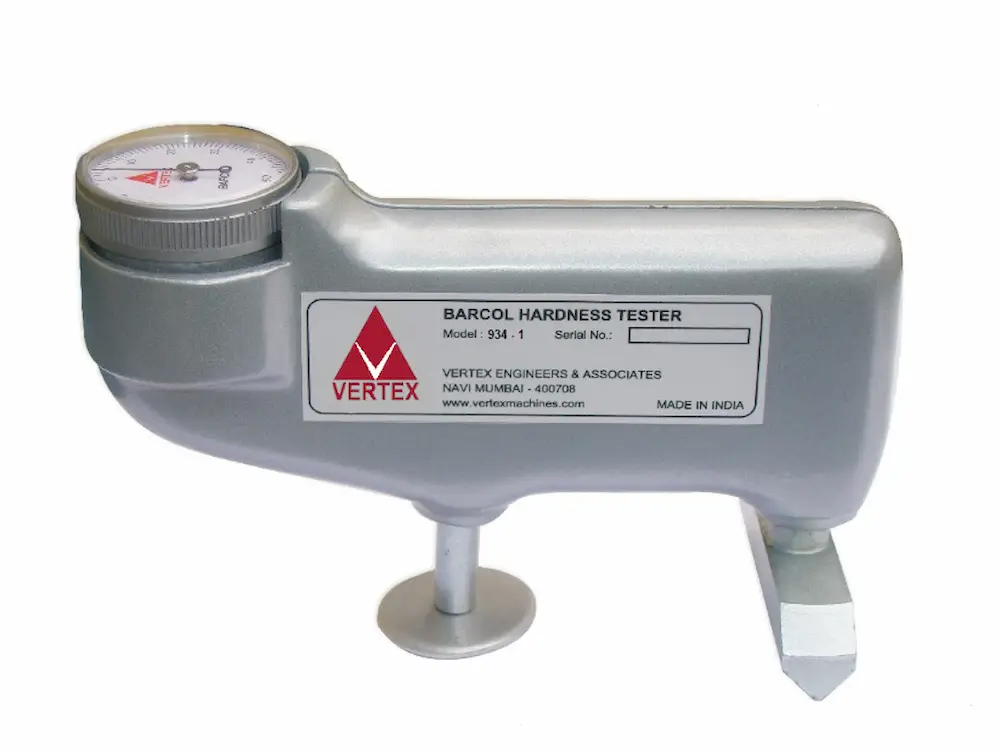
Model: 934-1
The Barcol hardness test characterizes the indentation hardness of materials through the depth of penetration of an indentor, loaded on a material sample and compared to the penetration in a reference material. The method is most often used for composite materials such as reinforced thermosetting resins or to determine how much a resin or plastic has cured. The test complements the measurement of glass transition temperature, as an indirect measure of the degree of cure of a composite. It is inexpensive and quick, and provides information on the cure throughout a part. The Barcol Tester is a small portable Hardness Tester having a weight around 1 Kg. It is suitable for testing hardness of aluminium, aluminium alloys, copper, brass, plastics, fiber glass and other soft materials having hardness from 25 to 150 BHN (10 mm ball / 500 kg load).No experience required; can be used in any position and in any space that will allow for the operator's hand. The hardness reading is instantly indicated on the dial, which is divided into one hundred graduations. No waiting, pre-loading or separate measurements.
Overview
This product is a state-of-the-art measuring device designed for precision and ease of use. Equipped with advanced technology, it ensures reliable performance for both professional and personal use. The sleek design and user-friendly interface make it a must-have tool for anyone needing accurate measurements.
Specifications
| Hardness Range | 0-100 HBa |
|---|---|
| Least Count | 1 HBa / (Optional) 0.5 HBa |
| Dimensions | 14 X 4.9 X 9 CM |
| Dimension of Case(LXWXH) | 25 X 22 X 7 CM |
| Impressor Weight | 450 gm |
| Carrying Case With Accessories Weight | 1 Kg |
| Standard Compliance | ASTM D2583, ASTM B648, IS:13360-5-14 (2001) NFP-38 501, BS-2782 |
Features
- Analogue Model with easy operational design
- Accurate measurement
- Aluminium Body
- Easy to calibrate
- Scratch resistant powder coated
- ABS Plastic carrying case
FAQ's
- Aluminum alloys
- Rigid plastics
- Fiberglass
- Composite materials like reinforced plastics
- Aerospace (for testing alloys)
- Automotive (for testing parts)
- Marine (for ship components)
- Plastic and composite manufacturing
- Clean the indentor regularly to remove debris or material build-up.
- Ensure the leveling plate and test legs remain undamaged for stable testing.
- Calibrate the tester periodically, especially if it is used frequently or subjected to rough handling.